Slip Resistance Standards: DIN 51097 and DIN 51130
How slip resistant a floor is should not be a guess — it is measured with a defined test. Below you will find how the two key standards work, what the classes mean and which class is expected in which area.
What is the ramp test?
Her iki standart da aynı mantığa dayanır: test edilecek zemin kaplaması, eğimi kademeli olarak artırılabilen bir rampaya monte edilir. Yüzey kirletilir, bir test kişisi rampa üzerinde ileri geri yürür ve eğim yavaşça artırılır.
Kaymanın başladığı açı, o zeminin sınıfını belirler. Açı ne kadar yüksekse zemin o kadar güvenlidir. İki standardın farkı, testin nasıl kirletildiği ve kişinin ayakkabılı mı çıplak ayakla mı yürüdüğüdür.
DIN 51130
Areas where people work in footwear
Used for areas where staff work wearing shoes. The test is carried out on a ramp whose angle is increased step by step: motor oil is applied to the surface and a test person walks on it in footwear. The angle at which slipping begins determines the R class of the floor.
| Class | Slip angle | Typical area |
|---|---|---|
| R9 | 6° – 10° | Entrance halls, retail areas, interiors that stay dry |
| R10 | 10° – 19° | Washrooms, garages, small kitchens, storage areas |
| R11 | 19° – 27° | Commercial kitchens, laundries, cold stores |
| R12 | 27° – 35° | Food production, oily process lines, large kitchens |
| R13 | above 35° | Production areas with heavy oil loads |
DIN 51097
Wet areas walked on barefoot
Used for areas walked on barefoot and wet, such as pool surrounds, showers and changing rooms. The test is again carried out on a ramp, but the surface is wetted with soapy water instead of oil and the test person walks barefoot.
| Class | Slip angle | Typical area |
|---|---|---|
| A | 12° and above | Changing rooms and barefoot corridors that tend to stay dry |
| B | 18° and above | Shower areas, poolside walkways, pool steps |
| C | 24° and above | Sloped pool entries, wave pool edges, stairs |
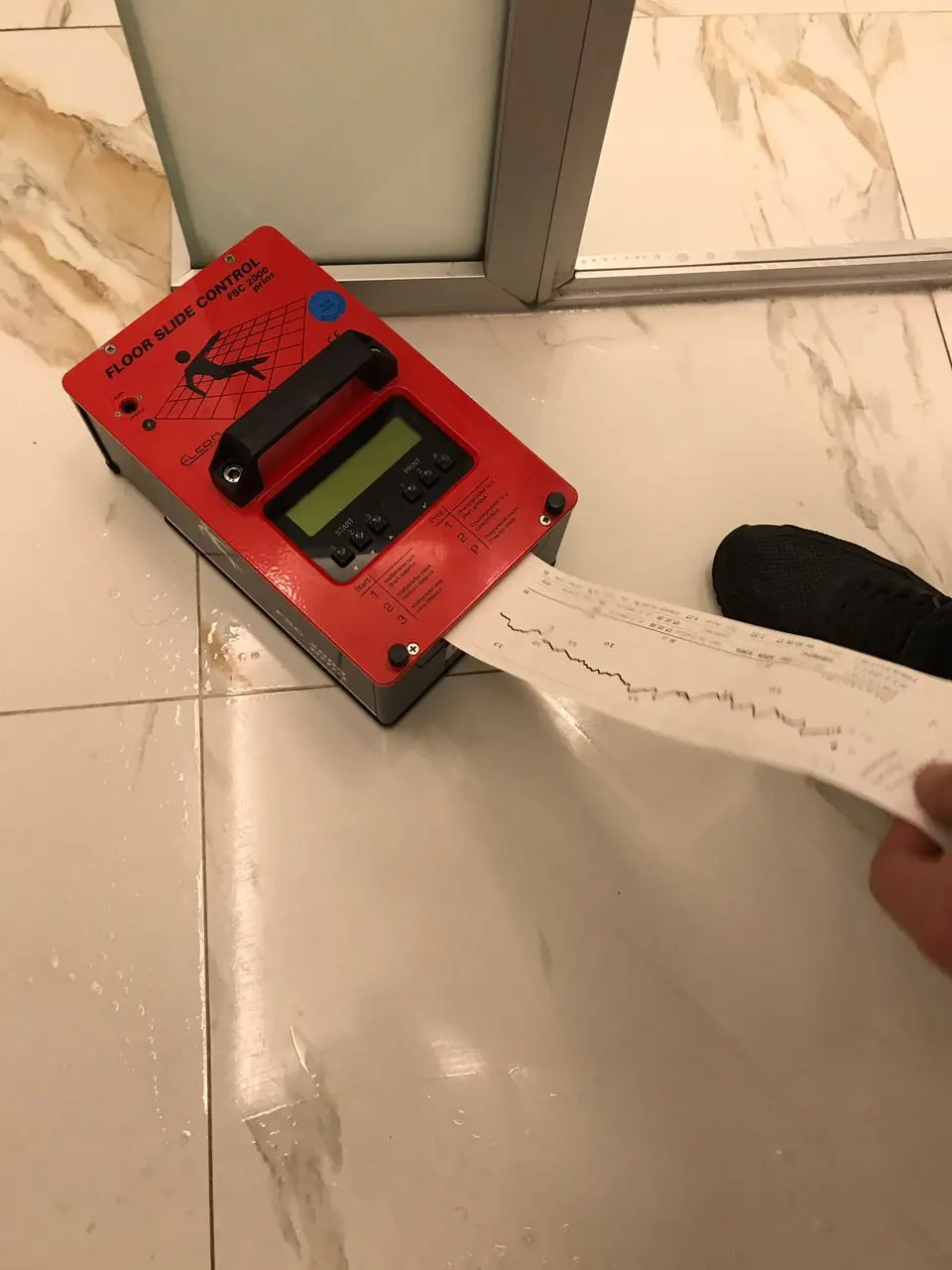
A class rating is not the same as an on-site measurement
R ve A/B/C sınıfları laboratuvarda, rampa testiyle belirlenir; mevcut bir zemin için sahada doğrudan ölçülmez. Sahada ölçülen değer sürtünme katsayısıdır. Bu ölçüm, uygulama öncesi ve sonrası yapılarak zemindeki iyileşmenin kayıt altına alınmasını sağlar — iş güvenliği dosyanıza da eklenebilir.
Frequently asked questions
What do R9, R10 and R11 mean?
They are slip resistance classes for a floor under DIN 51130. The higher the angle at which slipping begins in the ramp test, the higher the class: R9 is the lowest (6°–10°) and R13 the highest (above 35°) level of safety.
What is the difference between DIN 51130 and DIN 51097?
DIN 51130 applies to areas where people work in footwear and uses motor oil on the test surface. DIN 51097 is for wet areas walked on barefoot; it uses soapy water and the result is expressed in classes A, B and C.
Which class is required for which area?
The generally accepted match is: dry interiors R9, washrooms and garages R10, commercial kitchens and laundries R11, oily production lines R12–R13. For wet areas used barefoot, at least class B is expected for showers and pool surrounds.
How do I find out the class of my floor?
R and A/B/C classes are determined by a ramp test in a laboratory; they are not measured directly on site. What is measured on site is the coefficient of friction — recorded before and after treatment so the improvement is documented.
Does an anti slip treatment raise the class?
The treatment aims to increase the grip the floor provides when wet. Because the level reached depends on the type of floor, its surface condition and the kind of contamination, the outcome is assessed with friction measurements taken before and after.
What is the V value (V4, V6, V8)?
It is an additional value given for some floors under DIN 51130, showing the displacement volume — how much liquid the recesses and channels in the surface can drain away. It is stated alongside the R class particularly in production areas with heavy liquid spillage.
Anti slip treatment for your type of area
Technical Documents
Which class should your floor be in?
We review how the area is used and what your floor is made of, then recommend the right solution. The site survey is free.
Request a free survey