What is an Anti Slip Floor Solution? Plas Anti Slip Explained
Groundbreaking anti slip technology for safe floors. An invisible safety shield that leaves the look of your surface untouched.
PLAS ANTI SLIP® is a specialised solution applied over existing floor coverings that acts at a microscopic level without changing the natural appearance or finish of the surface. It removes the slipperiness that occurs when floors are wet, through the invisible grip points it creates in the surface.
PLAS ANTI SLIP® — SURFACES AND AREAS
Surfaces We Treat
- CERAMIC
- GLAZED TILE
- MARBLE
- GRANITE
- TRAVERTINE
- FLOOR TILES
- MOSAIC STONE
- CONCRETE
- PORCELAIN TILE
- EPOXY FLOORS
- POLISHED FLOORS
Where It Is Used
- SWIMMING SCHOOLS
- HOSPITALS
- HOTELS
- CATERING AREAS
- SHOPPING CENTRES
- WASHROOMS
- SCHOOLS
- BUILDINGS
- RESTAURANTS
- FACTORIES
- CANTEENS
- ALL SLIPPERY FLOORS
HOW DOES PLAS ANTI SLIP® WORK?
When PLAS ANTI SLIP® is applied, it creates microscopic channels and pores in the floor surface that are invisible to the eye. These micro structures prevent water from forming a film on the surface when the floor gets wet, and create a suction effect between the floor and the sole of a shoe or a bare foot.
The process does not damage the floor material, fade its colour or dull its finish. The effect lasts for years and requires no special maintenance beyond regular cleaning.

BEFORE treatment
On a smooth surface a film of water causes slipping
AFTER treatment
Microscopic channels increase grip
COEFFICIENT OF FRICTION MEASUREMENT
We document the success and reliability of our work with measuring instruments that comply with international standards. Our slip resistance measurements are carried out using the globally recognised ASM 825A and FLOOR SLIDE CONTROL 2000 instruments.
Standards
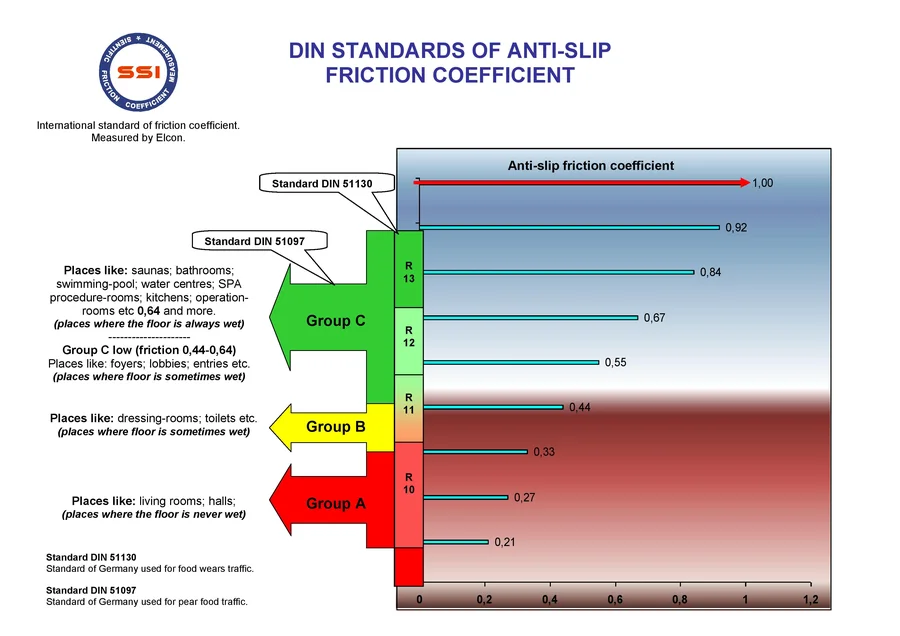
- DIN 51130: Slip resistance test standard for industrial and working areas.
- DIN 51097: Safety standard for wet floors and areas walked on barefoot.
* Measurement results are reported to our customers, documenting the effectiveness of the treatment with measured data.
Plas Anti Slip Sets
If you prefer to apply it yourself, the sets are available in the Akem Kimya online store.
PLAS ANTI SLIP Anti Slip Set, 1 kg each
1,600.00 ₺ + VAT
PLAS ANTI SLIP Anti Slip Set, 5 kg each
7,000.00 ₺ + VAT
Prices are the current prices in the Akem Kimya online store (Turkish Lira).
How much do you need?
Enter the application area to see the average PLAS ANTI SLIP quantity.
Step 1-3 product
≈ 1 kg
Step 2 product
≈ 1 kg
Average value: 1 kg Step 1-3 + 1 kg Step 2 ≈ 12.5 m² (10–15 m²). Varies with floor type and porosity.
Technical Documents
Download the PLAS ANTI SLIP product documents as PDF.
Frequently asked questions about anti slip floor solutions
What is an anti slip floor solution?
An anti slip floor solution is a chemical product applied over the existing floor covering that reduces slipperiness by creating grip points within the microscopic structure of the surface. Plas Anti Slip works without removing the floor or changing how it looks.
What is the difference between an anti slip solution and an anti slip coating?
A coating adds a new layer on top of the surface; it can wear, blister or peel over time. An anti slip solution acts within the floor’s own surface, leaves no layer to wear away, and does not alter the colour or pattern of the floor.
Which surfaces can be treated?
Ceramic, glazed tile, marble, granite, travertine, floor tiles, mosaic stone, concrete, porcelain tile, epoxy floors and polished floors can all be treated.
Does the floor look different after treatment?
No. PLAS ANTI SLIP® works into the invisible voids of the surface without affecting the appearance, finish or pattern of the floor. Colour and texture stay the same.
Does it still work when the floor is wet?
Yes. The whole purpose of the product is to break the film of water that gets between the surface and the sole of a foot or shoe when the floor is wet. It reduces slipperiness in both wet and dry conditions.
Which standards are used to assess slip resistance?
DIN 51097 (classes A, B, C) applies to wet areas walked on barefoot, and DIN 51130 (classes R9–R13) to areas where people work in footwear. The coefficient of friction can also be compared before and after treatment using measuring instruments.
Does cleaning have to change?
No. The floor is still cleaned with normal products. Because there is no tape or texture on the surface, no dirt-trapping structure is created.
Is a site survey needed?
The type of floor, its current level of slipperiness and how heavily it is used all determine the right solution, so an on-site assessment is carried out. You can request a free survey through the contact form.
Where is it used?
The slip resistance of floors is classified under the DIN 51097 and DIN 51130 standards. See what the classes mean.