Pool Deck Anti Slip Floor Treatment
The area around a swimming pool is one of the few places people walk barefoot on a wet floor. A thin film of water between the foot and a ceramic or marble surface reduces friction to almost nothing. Plas Anti Slip removes that risk without replacing the floor or changing how it looks.
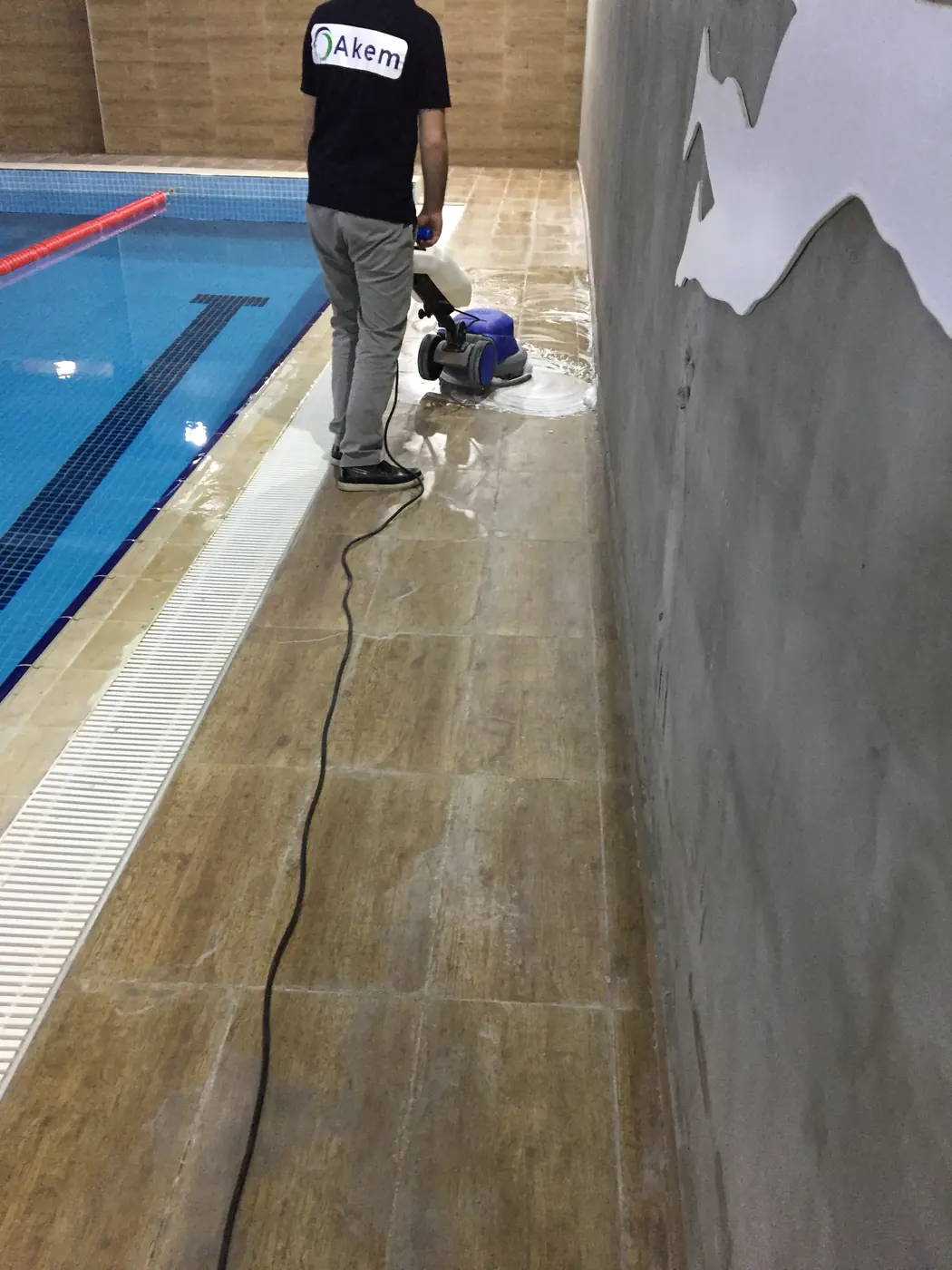
Why do pool surrounds become slippery?
- A thin film of water breaks the contact between the sole of the foot and the surface.
- Polished ceramic, marble and travertine lose most of their friction as soon as they are wet.
- Chlorine and maintenance chemicals gradually smooth the surface further.
- Sunscreen and body oils leave a slippery layer on the floor.
How does an anti slip solution work on a pool deck?
PLAS ANTI SLIP® does not add a coating on top of the surface. It works into the microscopic pores of the floor and creates invisible grip points. When the foot presses down, these channels drain the water trapped in between and contact is restored. The colour, pattern and finish of the floor stay exactly as they were.
See how the anti slip solution worksSurfaces we treat
- Ceramic
- Glazed tile
- Marble
- Granite
- Travertine
- Mosaic stone
- Concrete
Where this solution is used
- Swimming pool surrounds and steps
- Spa, sauna and Turkish bath areas
- Shower and changing rooms
- Poolside terraces and walkways
- Hotel and residential pool facilities
Relevant slip resistance standard: DIN 51097
Wet areas walked on barefoot are classified as A, B or C under this standard. Pool surrounds are among the areas where the standard expects the highest level of safety.
How are slip resistance classes determined?Plas Anti Slip sets for this area
PLAS ANTI SLIP Anti Slip Set, 1 kg each
1,600.00 ₺ + VAT
PLAS ANTI SLIP Anti Slip Set, 5 kg each
7,000.00 ₺ + VAT
Prices are the current prices in the Akem Kimya online store (Turkish Lira).
Technical Documents
A few of our pool and leisure facility projects:
In over 18 years we have completed more than 1,000 projects. See our full reference list.
Frequently asked questions
Do the tiles around the pool have to be removed?
No. The treatment is applied to the existing floor. There is no need to remove or replace ceramic, marble or travertine.
Will the floor look different afterwards?
No. The solution leaves no coating on the surface; it acts at a microscopic level. Colour, pattern and texture remain the same.
Do pool water and chlorine affect the treatment?
Because the treatment creates a change within the surface itself, it cannot peel or blister the way a coating does. It keeps its effect unless the surface is sanded or abraded; abraded areas are re-treated.
Can slip resistance be measured?
Yes. The coefficient of friction can be measured before and after the treatment with instruments such as the ASM 825A and the two readings compared.
Other application areas
Request a free site survey
We assess the current condition of your floor on site and share the right anti slip solution together with a quotation.